


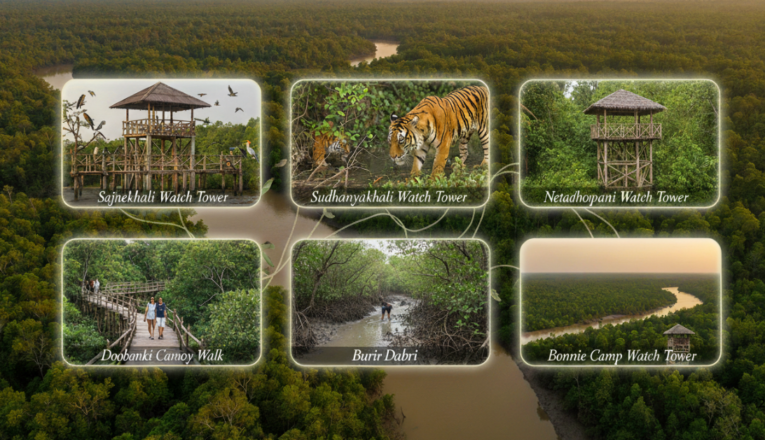
6 Watchtowers to Visit in Your Sundarbans Tour
The Sundarbans, the world’s largest mangrove forest and a UNESCO World Heritage Site, is a land of mystery, shifting tides, and the iconic Royal Bengal Tiger. Navigating this dense emerald maze is best done through its strategically placed watchtowers. These elevated platforms are not just vantage points; they are the safest way to witness the raw beauty of the wilderness.
If you are planning a trip to this mystical delta, here is a guide to the top watch towers you must include in your itinerary.
1. Sajnekhali Watch Tower
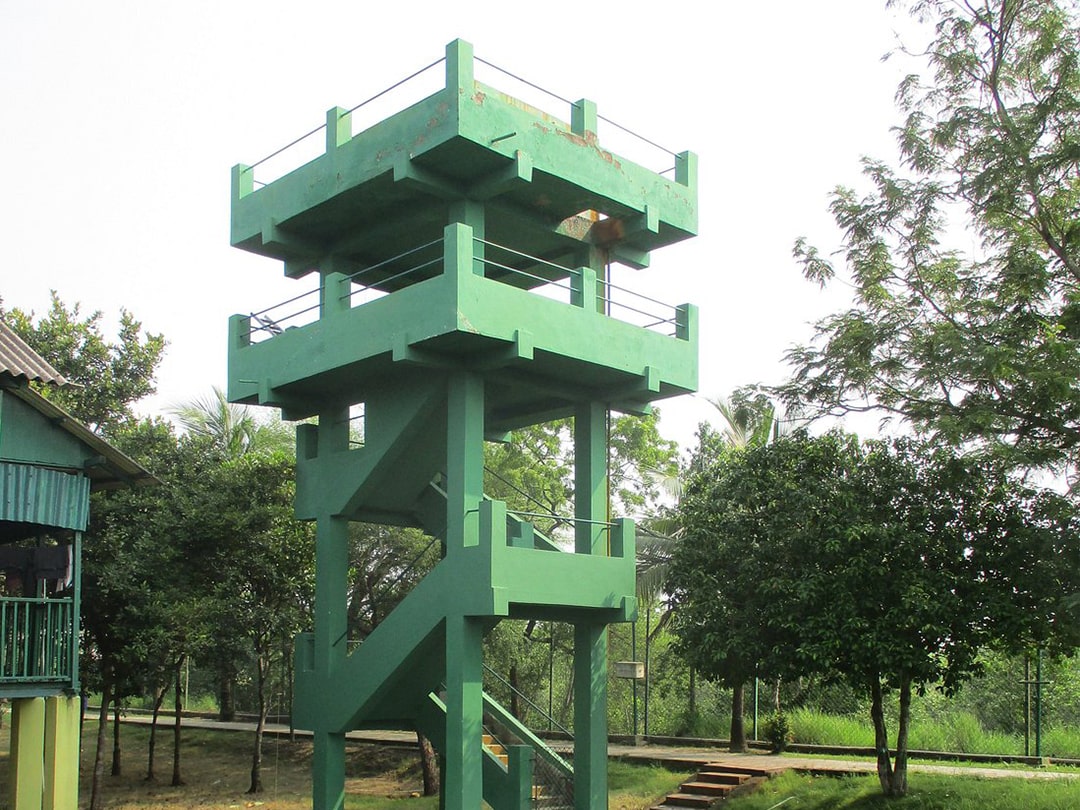
Most Sundarban tours begin at Sajnekhali. Serving as the head office of the Forest Department, this is where you obtain permissions to enter the deeper zones of the national park.
- What to See: This tower is a birdwatcher’s paradise. From Kingfishers and White-bellied Sea Eagles to Plovers and Whimbrels, the avian diversity is staggering.
- Bonus Attractions: The complex houses a Mangrove Interpretation Centre, a Crocodile Park, a Turtle Farm, and a Bono Bibi Temple, making it an educational and cultural hub.
2. Sudhanyakhali Watch Tower
If your primary goal is to catch a glimpse of the Royal Bengal Tiger, Sudhanyakhali is arguably the best spot. The tower overlooks a sweet water pond where animals frequently come to drink.
- What to See: Behind the pond lies a vast stretch of grassland without dense vegetation, offering clear, unobstructed views of wildlife. Apart from tigers, look out for Axis deer (spotted deer), wild boars, and crocodiles.
- Capacity: It can accommodate up to 25 people at a time, making it a bustling yet rewarding spot for wildlife enthusiasts.
3. Doobanki Watch Tower & Canopy Walk
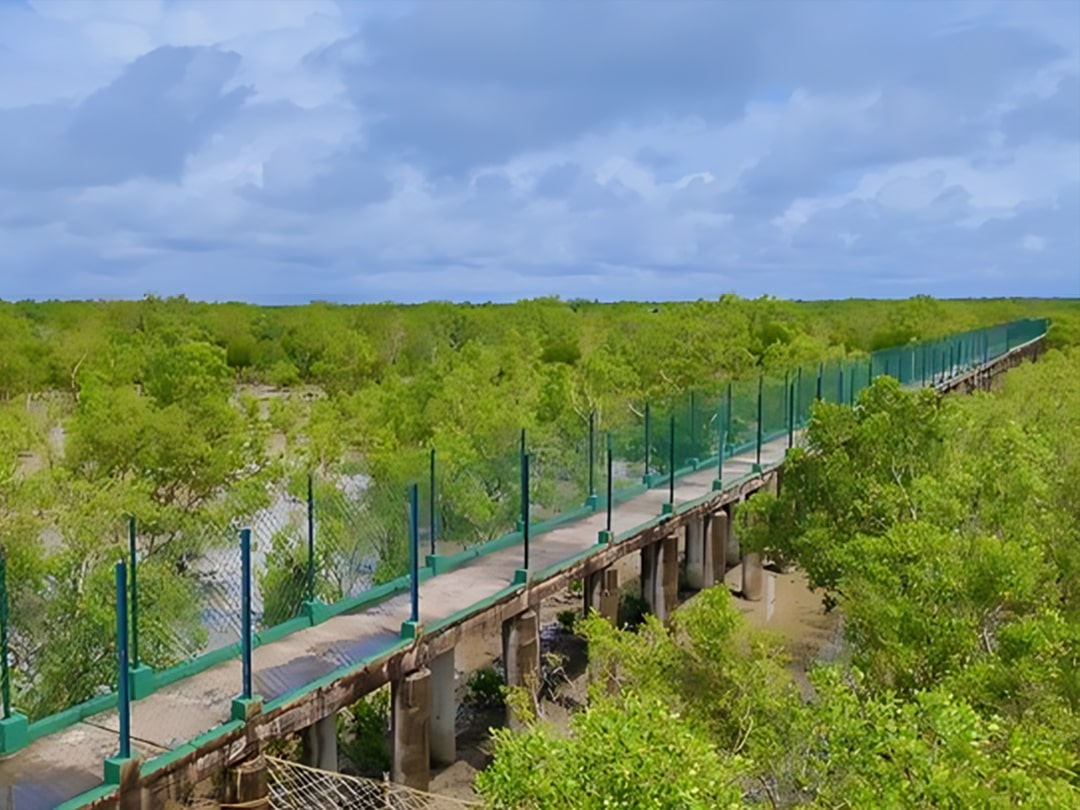
Doobanki offers one of the most unique experiences in the Sundarbans. It is famous for its Canopy Walk—a 496-meter-long bridge suspended 20 feet above the ground.
- The Experience: Protected by a high grill and strong net, this walk allows you to see the forest floor and the mangrove canopy from a bird’s-eye perspective.
- What to See: It’s a great place to spot Bahmini Kites, Chital Deer, and monitor lizards. The elevated perspective gives you a sense of being part of the forest rather than just an observer.
4. Netidhopani Watch Tower
Netidhopani is steeped in legend and history. It is linked to the famous folk tale of Behula and Lakhindari and offers a glimpse into the region’s ancient past.
- What to See: From the tower, you can view the ruins of a 400-year-old Shiva Temple. Archeological artifacts like terracotta wares found here add a layer of historical intrigue.
- The View: It also offers a view of a sweet water lake and what is believed to be an ancient coastal guard road built by King Pratapaditya.
5. Burir Dabri Watch Tower
Located on the easternmost edge of the Sundarbans Tiger Reserve, Burir Dabri is near the Bangladesh border. Because of its distance, it is quieter and less crowded than other spots.
- The Experience: The highlights here include a “Mud Walk” and a “Mangrove Cage Trail” that leads to the Raimongal View Point.
- The View: From this vantage point, you can look across the Raimongal River into the Bangladesh side of the Sundarbans. The sheer serenity and the sense of being on the “edge of the world” make it a must-visit for adventure seekers.
6. Bonnie Camp Watch Tower
Situated in the Kalash Island area, Bonnie Camp is one of the highest watch towers in the Sundarbans, standing at about 50 feet.
- What to See: Due to its height, it offers a breathtaking panoramic view of the surrounding mangrove sea. Tigers are often seen coming to the local sweet water pond.
- The Vibe: It is an eco-conservation sanctuary that feels incredibly remote and wild, perfect for those who want to escape the typical tourist trails.
Tips for Your Visit:
- Carry Binoculars: Many sightings happen at a distance; a good pair of binoculars is essential.
- Silence is Golden: Wildlife is easily spooked. Maintain silence on the watch towers to increase your chances of a sighting.
- Timing Matters: Early mornings and late afternoons are the best times for animal activity near the watering holes.
- Respect the Forest: Always follow the guidelines provided by your forest guide and the department.