


Planning a Sundarbans Trip? Find Out If It Is Worth Visiting
Most people ask this question for one reason: they want to know if they will see a tiger.
Short answer, and I would rather say it in the first paragraph than bury it under 900 words of atmosphere: no, you almost certainly will not. Operators who run boats here every week put the odds somewhere under one percent. Some say under 0.1%. Nobody keeps an official scoreboard, but every honest boatman on the Bidya river will tell you the same thing. Tigers here live inside mangrove so thick that a striped animal ten metres from your boat is invisible.
So if a tiger is your entire reason for coming, save your money and go to Ranthambore or Bandhavgarh instead. You will see one there.
The rest of this piece is for people willing to ask a better question: what is actually there, and is that worth two days of your life?
What a Sundarban trip really is
It is a boat holiday. Not a safari in the sense most Indians mean it.
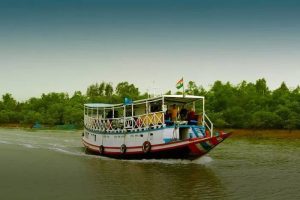
There are no jeeps. There is no forest road. The Sundarbans is 102 islands, tidal creeks, and a river system that reshapes itself every few years. The only way in is on water, and the only vehicle is a wooden boat with a diesel engine that thumps along at walking pace.
A typical day looks like this. You board around 7 or 8 in the morning at Godkhali or from the jetty near your resort. The boat moves for most of the day, stopping at two or three watchtowers, cutting into narrow creeks when the tide allows, and turning back before dark because overnight stays inside the forest are not permitted. Lunch is cooked on board. Somebody hands you tea in a small glass. You sit on a plastic chair on the deck, and you watch mud and water and green go past for hours.
That last sentence is the whole trip, honestly. Whether it sounds meditative or maddening to you is the real test of whether you should come.
What you will actually see
Plenty, as long as you drop the tiger fixation.
- Estuarine crocodiles: Common in winter, hauled out on the mudbanks at low tide, mouths open. These are big animals and seeing one from twenty feet of water is not a small thing.
- Spotted deer and wild boar: at the watchtower clearings, especially Sudhanyakhali, where the forest department maintains a sweet-water pond that pulls animals in.
- Birds, and this is the underrated part: Brown-winged and collared kingfishers, lesser adjutants, herons, egrets, ospreys, Brahminy kites, and if you have luck and a guide who knows sound, the mangrove pitta. Winter brings migrants on top of that. Carry binoculars. Most visitors do not, and most visitors miss ninety percent of what passes over the boat.
- Water monitors: occasionally enormous, sliding off banks.
- Dolphins: at Panchamukhani, the five-river confluence, though this is luck-dependent too.
And the mangroves themselves. Sundari, garan, keora, and the aerial roots pushing up through the mud in their thousands like a bed of nails. The forest breathes through those. At low tide the whole bank looks like it is bristling.
Read More:
10 Amazing Facts of Mangrove Tree
The honest downsides
I would rather you know these before booking than discover them at 11 a.m. on day one.
- Getting there is long: Kolkata to Godkhali is roughly three and a half to four and a half hours by road, more if you leave late and hit the Basanti Highway traffic. Then a boat crossing. You lose most of a day at each end. A one-night trip means you are travelling for about as long as you are actually in the forest.
- The watchtowers can disappoint: They are fenced enclosures with a viewing platform, and in peak season there can be forty people on one at the same time. Talking. Taking selfies. The quiet is on the boat, not on the towers.
- Summer is genuinely unpleasant: March to June runs 40°C and above with delta humidity on top. There is no shade on a river. Do not plan a family trip with elderly parents in May.
- Weekends and holidays are crowded: Not crowded like a hill station, but the creeks near Sajnekhali can have a queue of boats, and boat engines are loud. Wildlife notices.
- No ATMs, patchy mobile network: Take cash from Canning or Kolkata. Signal exists in Pakhiralaya and Gosaba and disappears once you are inside.
- Permits are not optional: Every person entering the forest zone needs a forest department permit, and a licensed guide is mandatory on the boat. Permits are issued at the Sajnekhali range office and the Field Director’s office in Canning, among others. You need original photo ID, not a photocopy on your phone. Foreign nationals need to apply further in advance. Fees are revised periodically, so check the current rate rather than trusting any blog, including this one.
- And it is not cheap for what it is: Between boat hire, permits, guide charges, meals, and stay, a two-night package usually lands in the ₹6,000 to ₹9,000 per head range from most Pakhiralaya resorts. Boat hire alone runs into thousands per day. If you were expecting a budget weekend, adjust.
Who loves the Sundarbans
From what I have seen of the people who come back a second and third time:
- Birders: Nowhere else in eastern India puts you this close to this many species with this little effort.
- Photographers: particularly anyone who likes light on water. Winter mornings on the Matla and Bidya are extraordinary and there is fog until about nine.
- People who want to switch off: No signal, no schedule, nothing to do but watch. Some people find this unbearable and some find it the point.
- Anyone interested in how people live here: The villages on Gosaba and Pakhiralaya are worth more of your attention than the watchtowers. Honey collectors go into tiger territory for a living. The Bonobibi shrines you pass are not decoration, they are load-bearing belief. The Tagore bungalow at Gosaba is a decent hour.
Who should skip it
- Anyone who needs a guaranteed tiger.
- Small children who cannot sit still for six hours on a boat.
- Travellers with one free day. A one-night trip is mostly travel.
- Anyone visiting between April and June for a comfortable holiday.
The best time to go
November to February. That is not a close call.
Winter gives you 18–24°C, low humidity, clear light, active crocodiles on the banks, and the migratory birds. Sightings of everything improve because animals come out to sun themselves.
October and early March are acceptable shoulder months. Monsoon has its own case: the forest is at its greenest, the crowds are gone, and the rivers are full. It is also wet, muddy, and rough on the water, and photography is difficult.
If you can only go on a weekend, go on a Sunday–Monday rather than Saturday–Sunday. Fewer boats.
How long to stay
- One night, two days: enough for Sajnekhali and Sudhanyakhali and a taste of the creeks. Rushed. Most of your trip is the drive.
- Two nights, three days: the sensible minimum. You get a full day of deep-creek cruising, Dobanki with its canopy walk, the five-river junction, and a village morning without watching the clock.
- Three nights or more: for birders and photographers, and for anyone who wants the offbeat towers like Burirdabri or Jhingekhali that day-trippers never reach.
Read More:
Weekend Sundarbans Packages from Kolkata
Practical things nobody tells you
- Wear dull colours. Olive, grey, brown. Bright clothing on an open deck is visible from a long way off.
- Carry mosquito repellent for the evenings at the resort, not for the boat.
- Take a cap, sunglasses, and sunscreen even in December. Reflected river light burns.
- Binoculars, again. 8×42 if you have a choice.
- Do not carry plastic bottles into the forest zone if you can avoid it, and do not throw anything into the water. This is a UNESCO site and a functioning ecosystem, not a picnic ground.
- Keep your voice down. Every conversation on a boat carries across water for hundreds of metres, and it is the single biggest reason boats see nothing.
- The buffer zone is where tourists go. The core zone requires separate permission and is genuinely restricted.
So, is it worth it?
Yes, with a condition attached.
It is worth it if you come for the delta rather than for a checklist. The Sundarbans is the largest mangrove forest on earth and it does not perform for visitors. There is no reliable spectacle. What there is instead is a landscape that behaves unlike anywhere else in India, tides that move six feet in a few hours, land that appears and disappears, and a forest that has arranged itself around salt water and does fine without us.
If you arrive wanting that, you will not be disappointed. If you arrive wanting a tiger photo for Instagram, you will spend two days annoyed and then write a bad review about it.
Solitary Nook has been hosting travellers at Pakhiralaya since 1995, right where the boats leave from. If you want a two-night itinerary built around what you actually want to see, rather than a fixed route that ends at the same three towers as everyone else, get in touch.