


Beyond Sajnekhali Discover the Hidden Wonders of Sundarban
Nearly every Sundarban trip runs the same route. Sajnekhali, Sudhanyakhali, Dobanki. Three watchtowers, one circuit, in a fixed order, on a schedule set by how long the boat takes to get between them.
There are good reasons for that. The three are genuinely worth seeing, they are reachable in a single day from Pakhiralaya, and the permits are straightforward. If you have two nights, that is the right trip and this post is not arguing otherwise.
But if you have been before, or you have three nights rather than two, there is a different Sundarban past those towers. Here is what is actually out there, what it takes to reach, and — honestly — what is beyond reach from this side of the delta.
Netidhopani
The one worth planning a trip around.
Netidhopani sits deep, near the edge of the core zone, and access is tightly rationed — only a small number of boats are permitted there on any given day. That restriction is the whole point. Fewer boats means less engine noise, less conversation carried across water, and animals that have not already been pushed off the bank by the boat ahead of you. Sighting odds are better here than anywhere on the standard circuit, and that includes the tiger odds, though they remain small.
There is also something unusual to look at. The ruins of a temple several centuries old stand near the tower, with terracotta fragments recovered from the site. A sweet-water pond draws animals in. The place carries a story — Behula and Lakhinder, from the Manasamangal — that every Bengali visitor will recognise and most guides will tell you.
The catch: it is a long day. The run out and back eats most of the daylight, permits are allocated and can be refused, and tides dictate the timing. This is not something to request on the morning of your cruise. Ask when you book.
The Five-River Junction and The Narrow Creeks
Panchamukhani, where five rivers meet, is a genuinely striking piece of water and is reachable on a longer cruise from Pakhiralaya. Dolphins turn up here occasionally.
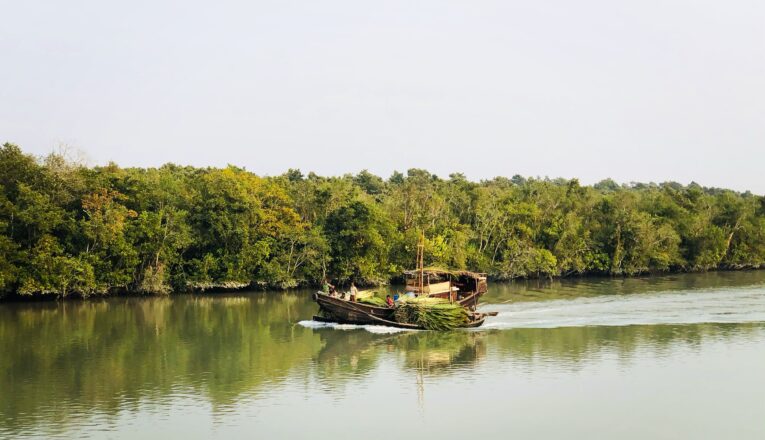
More to the point, the stretches between the named places are where the Sundarbans actually delivers. The small channels — Pirkhali, Gazikhali, Deul Bharani, the unnamed cuts your boatman knows — are narrow enough that both banks are close, shaded, and quiet. Kingfishers work these constantly. Crocodiles haul out on the mud. With the engine cut, drifting on the tide, this is the version of the delta people describe when they come back changed by it.
No watchtower gives you that. It is the single strongest argument for a longer trip, and it costs nothing extra in permits — only time.
What is Reachable From Pakhiralaya, and What Is Not
This is where most offbeat lists mislead people. They pool every remote spot in the delta into one article without mentioning that several of them are reached from completely different bases, hours away, on different rivers, under different forest divisions.
| Place | From Pakhiralaya | What it is |
| Netidhopani | Yes, long day | Restricted tower near the core zone, temple ruins, best sighting odds. Permit allocation applies. |
| Panchamukhani | Yes | Five-river confluence. Wide water, occasional dolphins. |
| Deep creeks | Yes | Pirkhali, Gazikhali and the small cuts. The best birding and the quietest hours. |
| Chargheri Char | Usually | Mudflat and creek area, good for waders at low tide. |
| Burirdabri | Different base | Basirhat range, reached from the Hingalganj side. Mud walk and canopy walk. |
| Jhingekhali | Different base | Also Basirhat range, north-east of the usual circuit. |
| Bonnie Camp | Different base | The tallest watchtower in the Sundarbans, in the South 24 Parganas division, reached from Jharkhali. |
| Kalash Island | Different base | Remote, usually paired with Bonnie Camp from the Jharkhali side. |
If an operator offers you all of these on one three-night trip from Godkhali, ask them to walk you through the route by day. Some combinations are not possible in the time, and finding that out on day two is a bad way to spend a holiday.
What The Extra Day Actually Buys
The honest answer is not more places. It is more time in fewer places.
On a two-night trip, the single cruise day has to cover the three towers, which means the boat is moving to a schedule. You stop, you look, you go. On a three-night trip with two cruise days, the schedule loosens. The boat can wait out a tide. You can spend an hour in one creek instead of ten minutes. You can take the long way back. And you have the margin to attempt something like Netidhopani without sacrificing everything else.
Guests who book the longer itinerary rarely talk afterwards about having seen more sites. They talk about having stopped rushing.
Read More:
All You Need to Know About the Sundarbans National Park
Who This Is For
- Repeat Visitors: If you have already done the three towers, doing them again is the least interesting way to spend a second trip.
- Birders and Photographers: Creek time is what produces species and good light. Tower time produces crowds.
- Anyone Who Found The Standard Circuit Busy: December and January weekends put a queue of boats in the same channels. The deeper routes are the fix.
- Travellers With History On Their Mind: The ruins at Netidhopani and the colonial-era bungalows at Gosaba are a different kind of trip from a wildlife one.
Who Should Skip It
- First-time visitors with two nights. Do the standard circuit properly instead.
- Families with young children. A second long boat day is usually one too many.
- Anyone travelling in monsoon. Deep routes depend on weather and tide cooperating, and in monsoon they often do not.
- Anyone who needs certainty. Restricted-access destinations can be refused on the day, and a trip built entirely around one of them has no fallback.
Planning Notes
- Ask at Booking, Not On Arrival: Restricted permits are allocated in advance and the quota is small. A request made the night before will usually fail.
- Winter Only, For The Deep Routes: November to February gives calm water, long usable daylight and the visibility these trips depend on.
- Expect Early Starts: A Netidhopani day begins before the standard circuit does and ends later.
- Tides Decide, Not The Itinerary: A good boatman will reorder the day around the water. Let him.
- Carry Food Tolerance For a Long Day: Lunch on board is fine, but the gaps are longer on these routes.
- Keep The Boat Quiet: You are paying extra for access to places with fewer boats. Talking loudly across the deck undoes that entirely.
Solitary Nook has run boats out of Pakhiralaya since 1995, and our crews know which creeks hold what at which tide. Tell us at booking if you want the deeper routes rather than the standard circuit, and we will tell you plainly what is possible in the days you have. Send an enquiry.